
Heaves in Horses (RAO): Symptoms, Management and Diet

Reviewed by Dr. Ali Ehtisham, DVM
Heaves is one of the most common respiratory conditions in horses and one of the most misunderstood. What was traditionally called heaves is now more precisely termed Recurrent Airway Obstruction (RAO) or Severe Equine Asthma, and understanding the condition properly is the first step toward managing it effectively. With the right environment and, where needed, medication, most affected horses can live and work comfortably.
What Is Heaves (RAO) in Horses?
Recurrent Airway Obstruction is a hypersensitivity disease of the lower respiratory tract that is closely analogous to asthma in humans. When an affected horse is exposed to organic dust, mould spores, or endotoxins — primarily from hay and bedding — the immune system mounts an exaggerated inflammatory response in the airways. The bronchioles constrict, mucus accumulates in the airways, and the walls of the airways become thickened and inflamed. The net result is a significantly reduced airway diameter that makes breathing, particularly exhalation, laborious.
RAO is distinct from Inflammatory Airway Disease (IAD), which is a milder form of equine airway inflammation typically affecting younger horses in work. RAO is characterised by the presence of clinical signs at rest — a horse with IAD typically only shows reduced performance, whereas a horse with RAO will cough and breathe with visible effort even standing quietly in its stable. The condition tends to worsen with age and with repeated exposure to triggers, and it is more common in older horses and in those kept primarily stabled in dusty environments.
Signs and Symptoms
The chronic cough is usually the first sign owners notice — a dry, intermittent cough that is most pronounced when the horse is in the stable or first brought out, when dust from hay or bedding is disturbed. As the condition progresses, the cough becomes more frequent and may occur during exercise. Flared nostrils at rest — when a healthy horse should be breathing easily through relaxed nostrils — indicate that the horse is working harder than normal to move air through obstructed airways.
The heave line is one of the most visually distinctive signs of established RAO. It is a groove or pronounced muscular ridge that runs diagonally along the lower abdomen from the flank toward the sternal area. It develops because the horse must use the abdominal muscles actively to force air out of the lungs — normal exhalation is passive, but in RAO, the narrowed airways require an active muscular effort to complete. A visible heave line indicates that the horse has been working to breathe for long enough that the abdominal muscles have hypertrophied in response. Exercise intolerance — a horse that tires quickly, recovers slowly, or shows increased respiratory rate long after work has ended — is another important indicator.
What Triggers RAO?
Organic dust is the primary trigger, and hay is the primary source of organic dust in the horse's environment. Even hay that appears clean to the human eye contains significant quantities of mould spores, bacteria, and fungal particles — and it is these microscopic particles, particularly those in the 2–5 micron range that penetrate deep into the airways, that drive the inflammatory response. The dusty traditional stable environment that most horses are kept in — loose hay nets shaken into the face, straw bedding disturbed underfoot, poorly ventilated barns — is essentially a continuous trigger delivery system for a horse with RAO.
Mould spore counts in hay vary significantly by harvest conditions, storage, and season. Late-cut hay, hay stored in damp conditions, and hay with poor fermentation characteristics can have mould spore counts orders of magnitude higher than good-quality early-cut hay stored dry. Bedding contributes separately: straw carries its own mould and organic dust load, and many RAO horses deteriorate significantly when managed on straw even when the hay is managed well. Understanding that the horse is being triggered throughout every hour it spends in a stable environment — not just when actively eating dusty hay — explains why management changes must be comprehensive rather than piecemeal.
How Vets Diagnose RAO
Clinical signs in a horse with a history of stable management and chronic cough are often sufficient for a provisional diagnosis. Your vet will listen to the lungs with a stethoscope — in an active RAO horse, wheezes, crackles, and increased airway sounds are often audible. A rebreathing examination, in which the nostrils are briefly occluded with a bag to force deeper breathing, can amplify airway sounds and make diagnostic findings more apparent. Endoscopy with bronchoalveolar lavage (BAL) provides definitive confirmation: a fluid sample is taken from the lower airways and analysed. In RAO, the sample shows a high proportion of neutrophils (greater than 25%), whereas in healthy horses and IAD horses the predominant cell is the macrophage.
Management — The Most Important Section
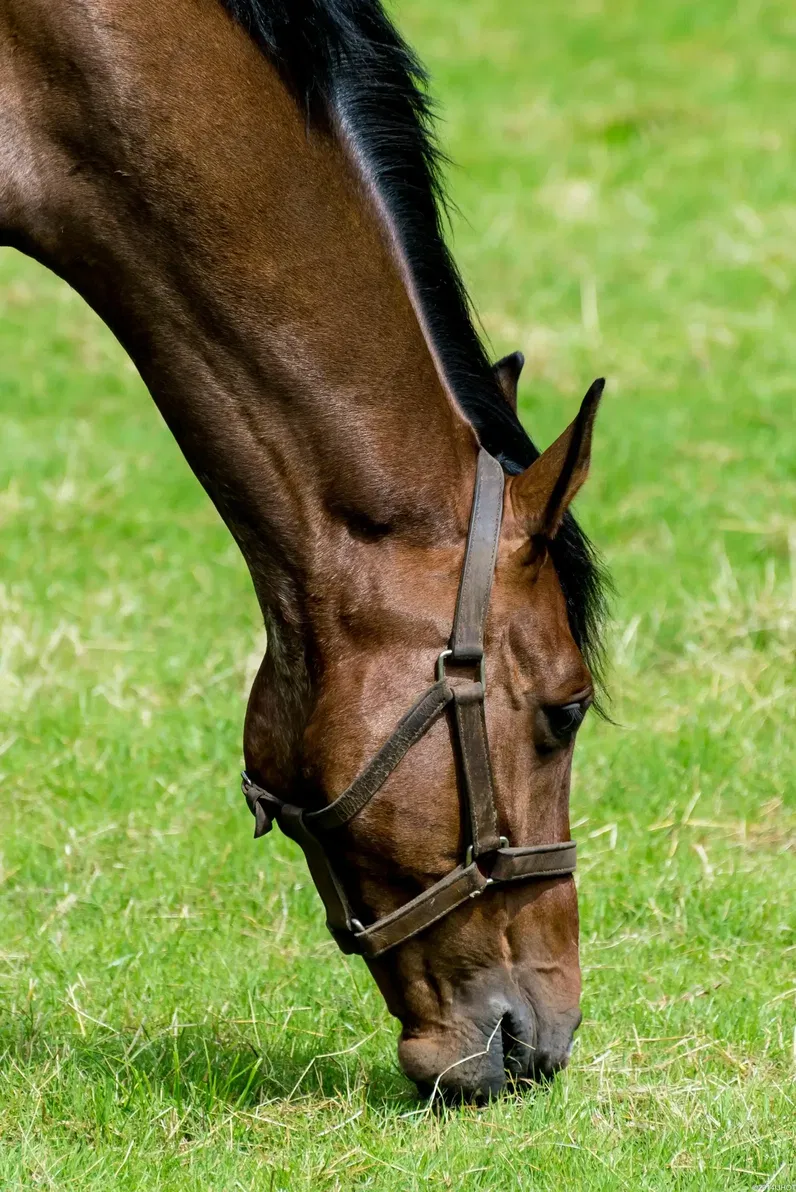
Maximum turnout is the single most effective intervention for a horse with RAO, and it is free. A horse living outside 24 hours a day in a well-grazed paddock with no hay supplementation during grass season is exposed to negligible organic dust and will often show dramatic clinical improvement within days. This is the most compelling evidence that the stable environment rather than an intrinsic defect in the horse is driving the disease. Whenever turnout is possible, it should be maximised.
When hay feeding is necessary, steaming hay for 50 minutes at temperatures above 100°C kills the vast majority of mould spores and bacteria and significantly reduces dust particle counts. Hay steamers are now widely available and represent a worthwhile investment for owners of RAO horses. Soaking hay in cold water for 30–60 minutes is a more accessible alternative — it achieves significant reductions in respirable dust and mould spore counts, though it also leaches water-soluble nutrients including some minerals and sugars. Both soaking and steaming must be done immediately before feeding, as wet hay deteriorates quickly and must not be left sitting.
Bedding management is equally critical. Straw should be eliminated entirely for RAO horses — even small amounts contribute meaningfully to the dust load in the stable environment. Rubber matting with minimal top dressing, paper bedding, or dust-extracted wood pellets are the best alternatives. The stable should be cleaned out completely before the horse is returned to it, not just skipped out with the horse standing in dust. Barn ventilation — open doors, ridge venting, good airflow — reduces the concentration of suspended particles in the air the horse breathes overnight.
Medical Treatment Options
Bronchodilators, most commonly clenbuterol, work by relaxing the smooth muscle of the bronchioles, widening the airways and providing relatively rapid symptomatic relief from bronchoconstriction. They are given orally or by inhalation and are most useful for acute management of episodes while environmental changes are implemented. Corticosteroids — prednisolone orally or dexamethasone by injection for acute cases — address the underlying inflammatory component of RAO and produce more sustained improvement. Inhaled corticosteroids via specially designed equine inhalers (such as the AeroMask) allow delivery directly to the airways at lower doses than systemic treatment, reducing the risk of side effects including laminitis that must always be considered when using systemic steroids in horses.
Long-Term Prognosis
RAO is a manageable condition, not a death sentence, but it does require genuine and sustained commitment to environmental management. Horses whose owners implement all the key management changes — maximum turnout, low-dust hay, appropriate bedding, good ventilation — can remain clinically normal and perform at high levels. Horses managed poorly will deteriorate progressively, developing permanent structural changes to the airway walls and increasing dependence on medication. The prognosis is therefore largely a function of the owner's commitment to management rather than the inherent severity of the disease.
Frequently Asked Questions
Can heaves in horses be cured?
No, RAO cannot be cured — the underlying hypersensitivity remains for the horse's life. However, with proper management removing the triggers (dust and mould spores from hay and bedding), the horse can remain largely symptom-free. Many well-managed RAO horses are completely normal at rest and during work as long as management standards are maintained consistently.
What is the best hay for a horse with heaves?
Steamed hay is the gold standard — it kills mould spores and bacteria while preserving nutritional value. Soaking hay for 30–60 minutes is a practical alternative that reduces dust and spore counts significantly. Haylage from sealed packaging is another low-dust option. Avoid any hay that smells musty or shows visible mould, and feed soaked or steamed hay immediately after preparation.
Is heaves painful for horses?
Heaves causes respiratory distress that is clearly uncomfortable — a horse visibly struggling to breathe is not comfortable. Chronic severe cases develop the heave line from prolonged muscular effort. While not painful in the same direct way as a musculoskeletal injury, the distress of difficult breathing significantly affects the horse's wellbeing and must be addressed.
Can a horse with heaves still be ridden?
Yes, once the condition is well managed and the horse is not showing resting signs, many RAO horses can be ridden and compete normally. Work should not begin during an active flare-up. Monitor recovery time and resting respiratory rate as indicators of how well the horse is managing, and adjust management if performance or breathing deteriorates.
What bedding is best for a horse with RAO?
Rubber matting with minimal or no top dressing is ideal. Paper bedding and dust-extracted wood pellets are good alternatives. Straw must be avoided entirely — it carries significant mould and dust loads even when it looks clean. Never put an RAO horse on fresh straw and expect the hay management to be sufficient alone.
For more on horse health and feeding, see the guide to what horses eat and common horse health problems. For a full overview of horse care, visit the complete horse care guide.
Disclaimer: This article is for educational purposes only. Always consult a licensed veterinarian for your pet's health and medical needs.
For a full overview of horse health, nutrition, behaviour, and care, see the complete horse care guide.

About the Author
Mike Albert Pet Care Advocate & Equine Wellness WriterMike is a passionate advocate for the welfare of horses, birds, and fish. With a background in animal husbandry and equine management, he brings firsthand experience to every guide he writes, helping owners provide the best possible care for a wide range of pets.

✓ Veterinary Reviewed
Dr. Ali Ehtisham, DVM Equine & Large Animals Rood & Riddle Equine Hospital — USADr. Ali Ehtisham is a Pakistani-trained equine veterinarian with experience at Rood & Riddle Equine Hospital. He specialises in horse health, performance, and preventive equine care.
LinkedIn ProfileReviewed for medical accuracy — not a substitute for professional veterinary advice. Learn about our review process.